A product has about three seconds to catch a shopper’s eye before they move on to the next shelf, and packaging is doing all the talking in that window.
Walk down any grocery aisle and you’ll notice something quickly: the products that stand out aren’t always the ones with the best recipe or the lowest price. Often, they’re the ones with packaging that immediately signals quality, freshness, or personality.
For food brands, choosing the right type of food packaging isn’t just a logistical decision about keeping a product fresh in transit. It’s a branding decision, a marketing decision, and in many cases, the deciding factor in whether a shopper picks up your product or walks right past it.
It is important for brands to understand that different types of food packaging serve different purposes. It is important to prioritize shelf life and protection when selecting packaging materials. Some prioritize the impact of visuals and branding space.
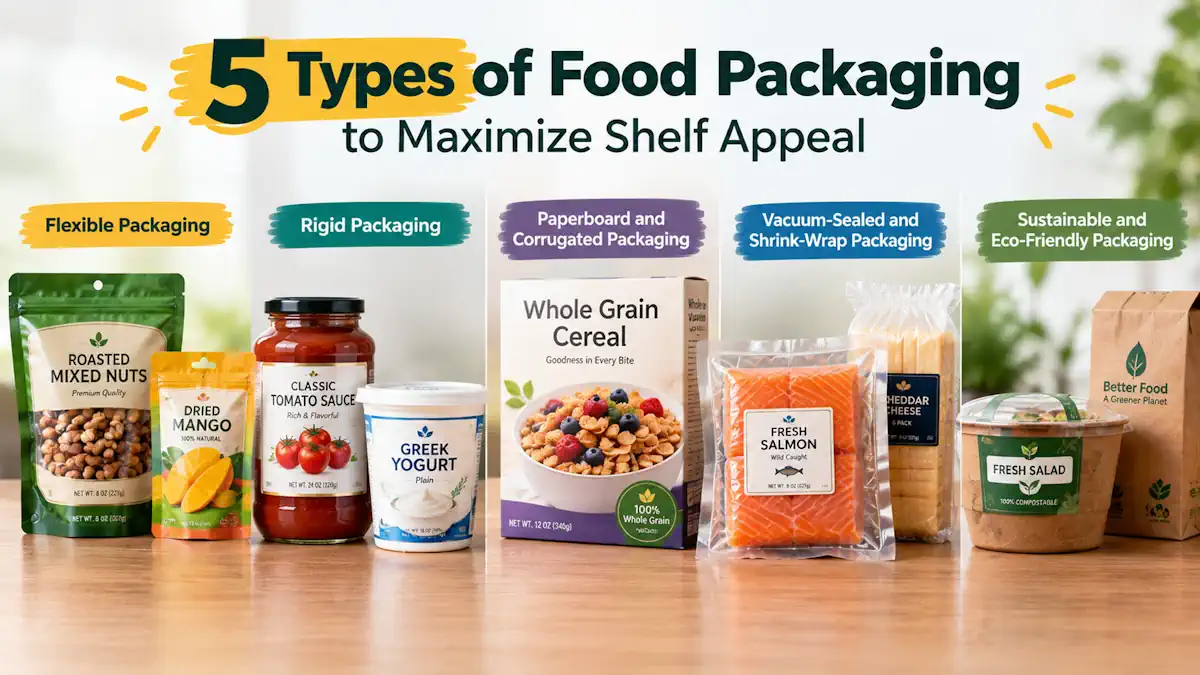
Packaging should be viewed as a marketing tool rather than a container, based on the product itself, the retail environment, and what role the brand wants packaging to play in marketing. There are five types of food packaging, each with its own uses and locations on retail shelves that make them stand out.
1. Flexible Packaging

Flexible packaging includes pouches, bags, sachets, and film wraps made from materials like plastic film, foil, or laminated composites. It’s one of the most widely used food packaging types today, showing up everywhere from snack bags and coffee pouches to frozen food bags and single-serve condiment packets. Part of its popularity comes from how adaptable it is: flexible packaging can be shaped, resealed, printed on almost every surface, and produced in large volumes at a relatively low cost. For brands trying to stand out with attractive food packaging on a budget, flexible formats offer a lot of design freedom without a heavy price tag.
- Lightweight and cost-effective to produce, ship, and store compared to rigid alternatives
- Offers full-surface printing space, ideal for bold colors, graphics, and brand storytelling
- Resealable options (zippers, spouts) improve convenience and product freshness after opening
- Works well for snacks, pet food, coffee, frozen goods, and single-serve items
- Stand-up pouches with clear windows let shoppers see the product, which builds trust at the shelf
- Recyclability varies by material, so brands focused on sustainable food packaging should check mono-material film options
2. Rigid Packaging

Rigid packaging covers containers that hold their shape regardless of what’s inside: think glass jars, plastic tubs, bottles, and hard-shell clamshells. This category tends to communicate durability and premium quality more naturally than flexible formats, which is why it shows up often with sauces, dairy products, oils, and specialty foods.
Rigid containers also protect contents better against crushing, which matters for shipping and stacking on crowded retail shelves. From a shelf appeal standpoint, rigid packaging gives brands a three-dimensional canvas: labels, embossing, unique bottle or jar shapes, and colored materials can all be used to differentiate a product before a shopper even reads the label.
- Provides strong physical protection against crushing, punctures, and stacking pressure
- Glass and premium plastics often signal higher perceived value to consumers
- Unique container shapes (jars, bottles) can become part of brand recognition over time
- Reusable by consumers after the product is used, adding perceived value
- Heavier than flexible packaging, which increases shipping costs and carbon footprint
- Best suited for sauces, oils, dairy, jams, and specialty or gift-oriented food products
3. Paperboard and Corrugated Packaging

Paperboard and corrugated packaging includes cereal boxes, cardboard cartons, takeout containers, and shipping boxes made from layered fiber materials. This is one of the most familiar food packaging materials in retail because it’s affordable, easy to print on, and widely recyclable.
Paperboard is typically used for the outer packaging of products that also need an inner liner or bag (like cereal or crackers), while corrugated board is common for shipping and bulk retail displays. For shelf appeal, paperboard packaging offers large, flat surfaces that are ideal for detailed branding, nutritional information, and eye-catching graphics, which makes it a strong choice for brands that want packaging design to tell a fuller story.
- Highly customizable with die-cut shapes, matte or glossy finishes, and full-color printing
- Generally recyclable and often made from recycled content, appealing to eco-conscious shoppers
- Cost-effective for large production runs and bulk retail packaging
- Large surface area supports detailed branding, ingredient lists, and storytelling
- Less resistant to moisture on its own, often requiring an inner liner for perishable items
- Commonly used for cereal, snack boxes, bakery items, and takeout or delivery packaging
4. Vacuum-Sealed and Shrink-Wrap Packaging

Vacuum-sealed and shrink-wrap packaging removes air from around the product before sealing it tightly against the item’s shape. This type of packaging for food products is especially common with meats, cheeses, and other perishables where extending shelf life and preventing freezer burn matters more than decorative branding space.
Shrink wrap is also frequently used as a secondary packaging layer, bundling multiple units together for retail display or protecting printed labels underneath a clear plastic layer. While it’s less about flashy design, this packaging type still contributes to shelf appeal by keeping products looking clean, tightly sealed, and free of visible air pockets, which shoppers often associate with freshness.
- Extends shelf life by significantly reducing oxygen exposure
- Prevents freezer burn and moisture loss in meats, cheeses, and seafood
- Creates a tight, clean appearance that reads as fresh and well-handled
- Often used as secondary packaging to bundle multi-packs or protect printed materials
- Limited branding space compared to flexible or rigid packaging, since the wrap conforms tightly to the product
- Common in meat counters, deli sections, and bulk multi-unit retail packs
5. Sustainable and Eco-Friendly Packaging

Sustainable food packaging includes biodegradable films, compostable containers, plant-based plastics, and packaging made with reduced material weight or recycled content. This category has grown quickly as more shoppers factor environmental impact into their buying decisions, and many retailers now favor suppliers who can demonstrate sustainability efforts.
Beyond the environmental angle, eco-friendly packaging often doubles as a branding advantage: clearly labeling a product as compostable or made from recycled materials can influence purchasing decisions for a growing segment of consumers who actively look for that signal on the shelf. It does typically come with tradeoffs in cost and material performance, so brands need to weigh those factors against the marketing and consumer-trust benefits.
- Appeals directly to environmentally conscious consumers and can influence purchase decisions
- Includes options like compostable films, plant-based plastics, and recycled paperboard
- Can strengthen brand identity around values like sustainability and transparency
- Often costs more per unit than conventional packaging materials, at least for now
- Performance (moisture resistance, shelf life) can vary more than with traditional materials, so testing matters
- Clear labeling of sustainability claims builds trust and avoids accusations of greenwashing
Final Thoughts
Choosing among the different types of food packaging isn’t just about protecting a product from point A to point B. It’s about how that product presents itself the moment it lands on a shelf next to a dozen competitors. Flexible packaging offers affordability and bold branding space. Rigid packaging signals durability and premium positioning. Paperboard and corrugated options provide a large canvas for storytelling at a reasonable cost. Vacuum-sealed and shrink-wrap formats prioritize freshness and clean presentation.
Sustainable packaging speaks directly to a growing segment of environmentally minded shoppers. The right choice depends on the product, the budget, and how much weight a brand wants packaging design to carry in the overall purchasing decision, but in nearly every case, thoughtful packaging pays off in stronger shelf appeal and better brand recognition.

Faisal Ur Rehman is SEO advisor at Reusable Packaging News and co-owner and content editor at Forklift News. He brings more than six years of hands-on experience with Blue Box Packaging, a U.S. custom box manufacturer, where he gained firsthand knowledge of packaging production processes and manufacturing equipment. Faisal has also worked with Reusable Packaging News for more than four years. His coverage includes packaging compliance, reusable transport packaging, pharmaceutical packaging, material handling and supply chain logistics. Connect with Faisal on LinkedIn or view his journalist profile on Muck Rack.