
Evan Padilla, Structural Design Manager at Menasha Packaging, discusses how Amazon Transparency codes affect package design, co-packing, inventory management, and the transition to unit-level serialization.
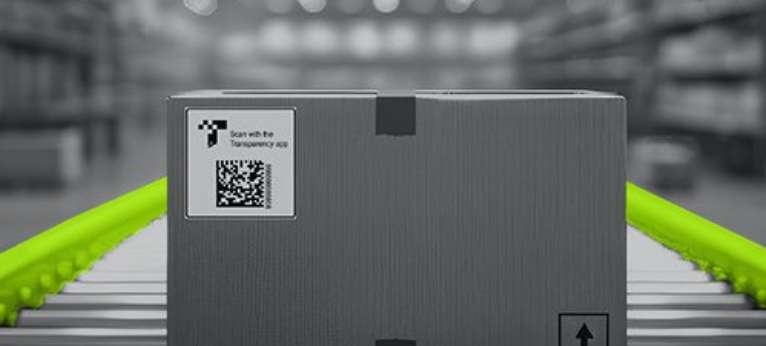
Counterfeit protection may be the starting point for Amazon’s Transparency program, but for packaging teams, the practical implications go much further. Once a product is enrolled, serialization touches package design, printing, inventory management, co-packing and quality control.
The basic concept is straightforward. Amazon Transparency uses unique codes associated with individual sellable units to help authenticate enrolled products. For brands, this can provide another layer of protection against counterfeit or unauthorized products entering the marketplace. For consumers, the code provides another way to confirm that the item they received is authentic.
Evan Padilla, Structural Design Manager at Menasha Packaging, has been working with customers navigating those requirements. He said counterfeit protection is the headline benefit, but there is more to the system than authentication alone. Because the code identifies an individual unit, brands can also gain information from scans associated with that product as it moves through the supply chain.
“You can check all these scans along the way,” Padilla said. “Logistics-wise and just for your own data, brands are going to get a lot of insight from this. There’s a lot of power in this code.”

That visibility can give brands additional insight into what is happening around particular SKUs. Padilla also pointed to products attracting multiple third-party sellers as candidates for closer scrutiny. In those cases, Transparency can help a brand strengthen control over which inventory is accepted into Amazon’s system.
The packaging challenge begins when those protections and data capabilities have to be translated into thousands, or millions, of physical packages moving through production and distribution. That requires decisions about where the code will be applied, who will manage it, and how the brand will prevent coding errors as inventory moves through the network.
Padilla said Transparency originally gained traction in categories where counterfeit products could closely imitate legitimate packaging.
“Some were getting the packaging so good that it was hard to decipher if it was actually legitimate or if it was fake,” Padilla said. “The fallout from the consumer falls back onto the brands and not to the people that are putting counterfeit product out there.”
Once an enrolled product reaches protected status, Amazon looks for the appropriate Transparency code on the unit. Padilla said that gives the brand greater control over which products can enter the system.
“When you enroll an item, and it’s in protected status, when Amazon inbounds those items, they’re looking for a Transparency code,” he said. “If you’re producing the goods, or you have a third-party manufacturer or co-packer doing it for you and you’re providing them the codes, you know the product with the codes on it is the product that’s going to make it into Amazon.”
Amazon’s current labeling guidance reinforces how comprehensive that requirement can become. All inventory units carrying a protected GTIN, or Global Trade Item Number, must bear a Transparency code, regardless of the sales channel, whether the code is added as a label or incorporated directly into the package.
Start With the Sellable Unit
For packaging professionals, one of the first questions is not about printing technology. It is about defining exactly what is being sold.
Padilla said the Transparency code is applied to the sellable unit associated with the enrolled product. That distinction becomes important when a brand sells the same item individually, in multipacks or in mixed bundles.
“The Transparency code will be applied to whatever your sellable unit is,” Padilla said. “This is where it gets tricky for some brands, because once you enroll in the program, let’s say your item is a single bottle of water. Every single bottle of water you produce that shares the same UPC is going to need a Transparency code, no matter what retailer it goes to.”
That has encouraged some brands to think strategically about what they enroll. Rather than serialize every individual item, a company may decide that the e-commerce sellable unit should be a two-pack, three-pack or variety pack.
“We’ve seen a lot of our brands enroll two-packs, three-packs, four-packs and mixed variety packs,” Padilla said. “Then you’re only putting one Transparency code on there, and it’s on the outside of the sellable unit that goes to the consumer.” The product identifier tells the system what the item is, while serialization distinguishes one physical unit from another.
Amazon describes its Transparency code as a GS1-compliant serialized QR Code or DataMatrix. The exterior of each unit must also include the Transparency logo or logomark, a call to action directing the consumer to scan the code, and a product identifier that helps ensure the correct code has been applied to the correct product.
Brands have several ways to work that information into the package. Amazon describes three basic approaches: a predefined Transparency label, a custom label, or a Design-In approach that incorporates Transparency content into the existing consumer-facing package artwork. The right choice will depend on the package format, production volumes, and where the code can be applied most reliably.
The Transition Can Be Harder Than the Printing
Padilla believes one of the easiest mistakes is underestimating the changeover from existing inventory to Transparency-coded product. A brand may already have significant quantities of finished goods spread across plants, warehouses, co-packers and distribution centers. Once coding begins, labeled and unlabeled products can be moving through the network at the same time.
“Brands sometimes underestimate how tricky it could be to get started on the program,” Padilla said. “You have existing inventory throughout the network that you may be shipping in. When you switch Transparency on, and you start labeling things, you really want to be tracking what inventory is labeled versus the existing inventory you had that wasn’t labeled.”
Lot tracking and first-in, first-out practices can help move older uncoded inventory through the network while newly serialized inventory begins taking its place. Brands also need to decide who will control the coding process.
“If they’re going to take on the labeling themselves, they need to be prepared for that, or they need to have a trusted third-party co-packing partner that’s able to do the coding for them,” Padilla said. “It’s making sure they have their processes in place and all their systems ready.”
There is little room for casual handling. Missing codes, codes applied to the wrong SKU or duplicate applications can interfere with authentication downstream.
Amazon’s guidance also gets surprisingly specific about package design. Depending on the label configuration, the Transparency code and product identifier must appear on the same side of the package, remain uncovered and not wrap around an edge or corner. Such requirements push Transparency out of the IT department and squarely into packaging operations.
Printing Serialization Into the Package
How the code is applied can change as a Transparency program matures. For a limited rollout, applying a separate label may be the simplest path. At higher volumes, brands may find it more efficient to incorporate the variable information into package production itself.
Padilla said Menasha can support that approach on paperboard packaging. “It comes down to the planning,” he said. “It is able to be applied at all different parts of the process of getting it into a finished good. We’ve had customers where the finished good is a paperboard carton, and Menasha has the capability of putting this in during material manufacturing.”
Digital printing plays an important role because the information changes from package to package. “We have a tool-less, plate-less digital printer that’s able to print the serialized codes,” Padilla said. “The thing with Transparency codes is every single code is unique.”
That uniqueness is central to the anti-counterfeiting value of the system. A counterfeiter might reproduce the appearance of a legitimate carton, but copying a code from an authentic package creates another problem. Once the legitimate serialized code has moved through the system, reuse of that code can raise a red flag.
Choosing Where Serialization Makes Sense
Padilla sees value in looking at Transparency before a counterfeit or unauthorized seller problem forces the issue. That does not necessarily mean enrolling an entire product portfolio.
Brands can instead look for SKUs where unauthorized sellers, marketplace competition, counterfeit concerns or lost sales make unit-level authentication more valuable. “I think the brand should be proactive rather than waiting for Amazon to approach them,” Padilla elaborated. “They’re going to want to look at their portfolio and see where they’re seeing missed sales or high competition on the SKU.”
Making that decision early also gives the packaging team more room to plan. The brand needs to determine what the sellable unit will be, where the unique code will be applied and whether coding will take place during package production, farther downstream or through a co-packer. Existing uncoded inventory also has to be worked through without becoming mixed up with newly serialized product.
The Transparency code itself takes up very little package real estate. Managing everything behind it is the bigger job, particularly when production, packaging, co-packing, and distribution are spread across several locations.
Official Resources
Related Articles
Costco Compliance Packaging: Designing the Pallet as the Store
From Display to Data: How POP Is Changing at Retail
POP Display ROI Checklist: Design and Execution That Drive Results

Rick LeBlanc, EMBA, is the founder and editor of Reusable Packaging News (subscribe to the free newsletter) and editor of Western Pallet Magazine. A supply chain journalist with more than 30 years of experience, he specializes in pallets, reusable packaging, material handling and related operations. Rick is co-author of Pallets: A North American Perspective and Pallets & Progress: A Collected History of Pallets and Palletized Handling 1922–1945. He is also an advisory board member of the Virginia Tech Center for Packaging and Unit Load Design. Read Rick’s full bio.


